For months, the signals have been unmistakable.
Every week brings a new launch. A checkout feature here, a merchant integration there. But it's not just the volume of announcements. What's changed is the seriousness. Brands are allocating budget to AI shopping visibility. Teams are being formed to manage agentic commerce readiness. Users are completing purchases inside ChatGPT, Gemini, and Copilot. The conversation has shifted from "will this happen" to "how do we prepare."
Something fundamental is taking shape. And it happened fast.
To understand where we are, we decided to trace how we got here. Below is the timeline of launches we believe matter most. The ones that built the infrastructure, defined the standards, and moved agentic commerce from theoretical to inevitable. It starts with ChatGPT. It ends with enterprise merchants empowered to build and deploy their own agents.
NOV '25: OpenAI Shopping Research
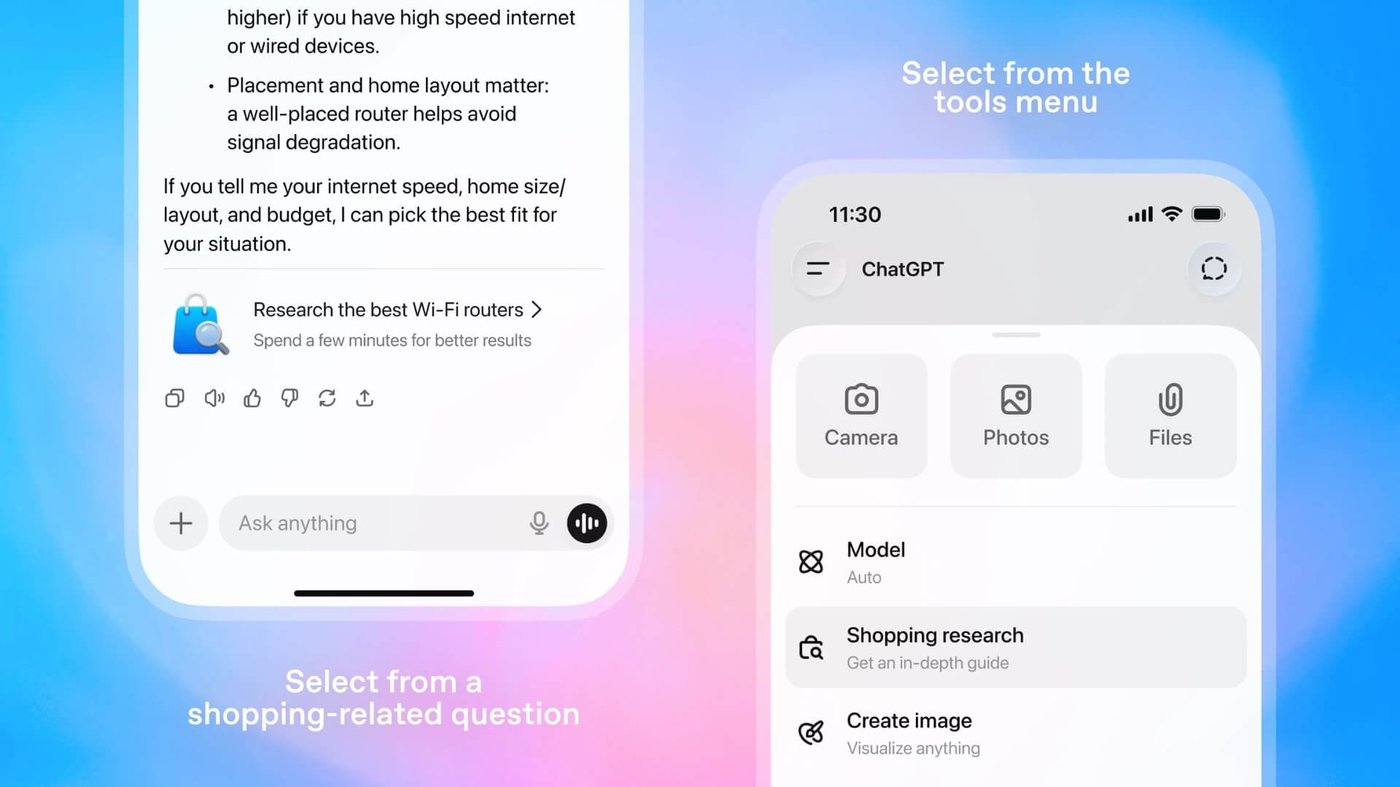
On November 24, OpenAI launched Shopping Research, a ChatGPT feature that generates detailed shopping guides with product comparisons, pricing, and retailer information. Users could ask for product recommendations and get a compiled guide with top options, key differences, and current pricing. It wasn't checkout. It was research. The thinking layer before purchase.
This wasn't a hidden feature. OpenAI was announcing publicly that shopping discovery happens inside ChatGPT now. The feature reached 900 million weekly active users.
Why it matters: Shopping Research positioned ChatGPT as a commerce discovery surface. For the first time, millions of users discovered that AI could research products for them instead of visiting multiple retailer websites.
DEC '25: Shopify Agentic Storefronts
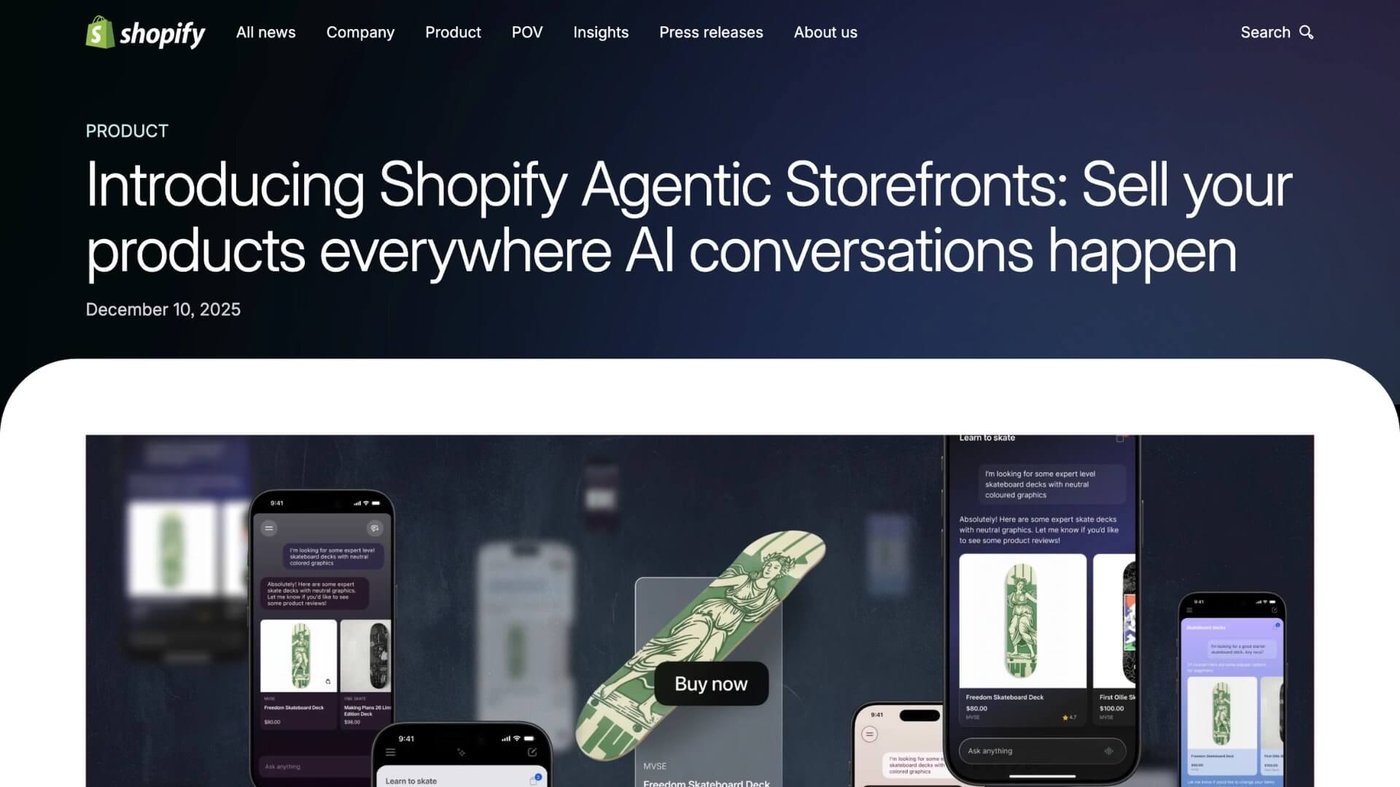
Shopify announced Agentic Storefronts in its Winter '26 Edition. Over 1 million Shopify merchants became automatically discoverable inside AI agents like ChatGPT, Perplexity, and Microsoft Copilot. No setup required. No negotiation. Your products were in.
Shopify made the decision for merchants. The barrier to entry was zero, and participation was expected, not optional.
Why it matters: Merchants didn't have to opt-in. Over 1 million stores were automatically live in agentic commerce. Participation became default, not optional.
JAN '26: Microsoft Copilot Checkout + Google Universal Commerce Protocol
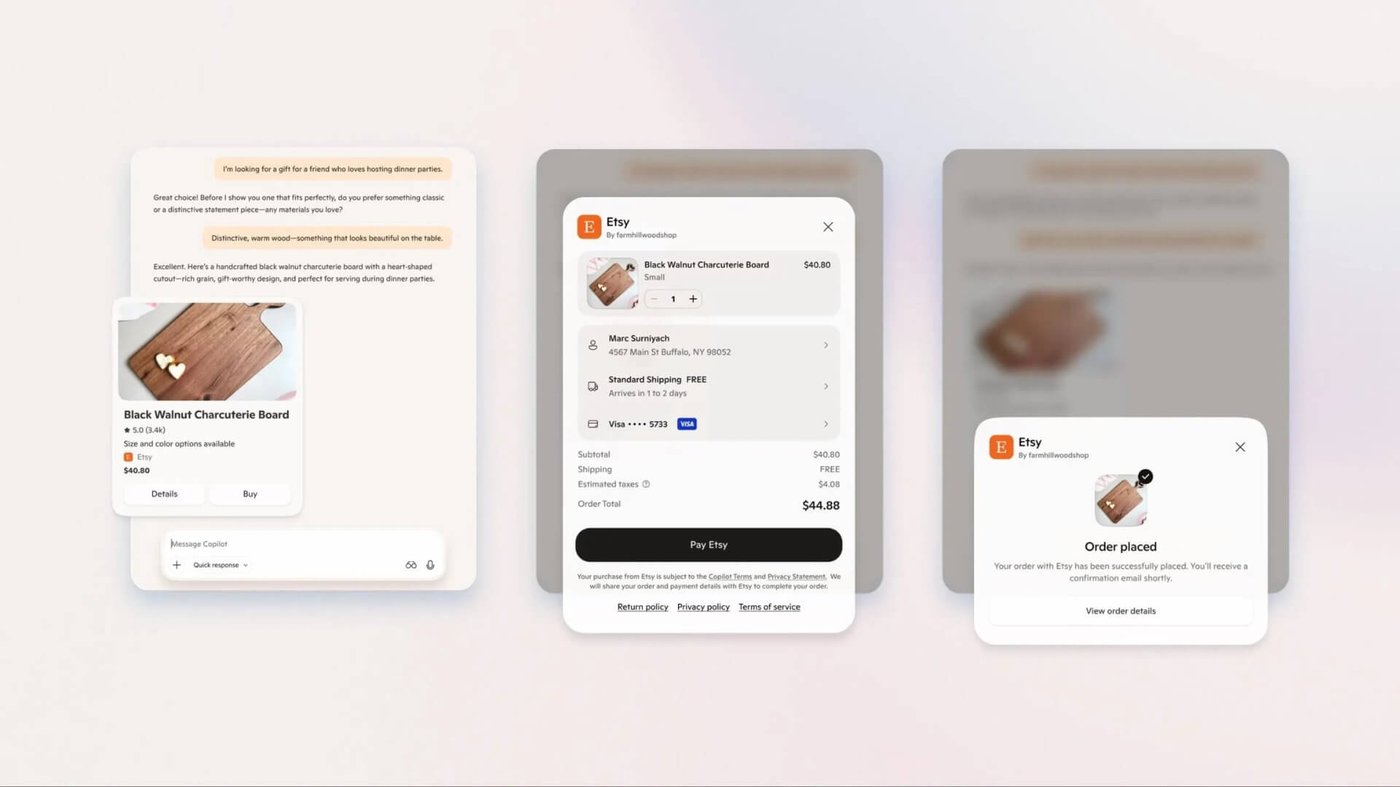
On January 8, Microsoft launched Copilot Checkout, letting users complete purchases directly inside Copilot.
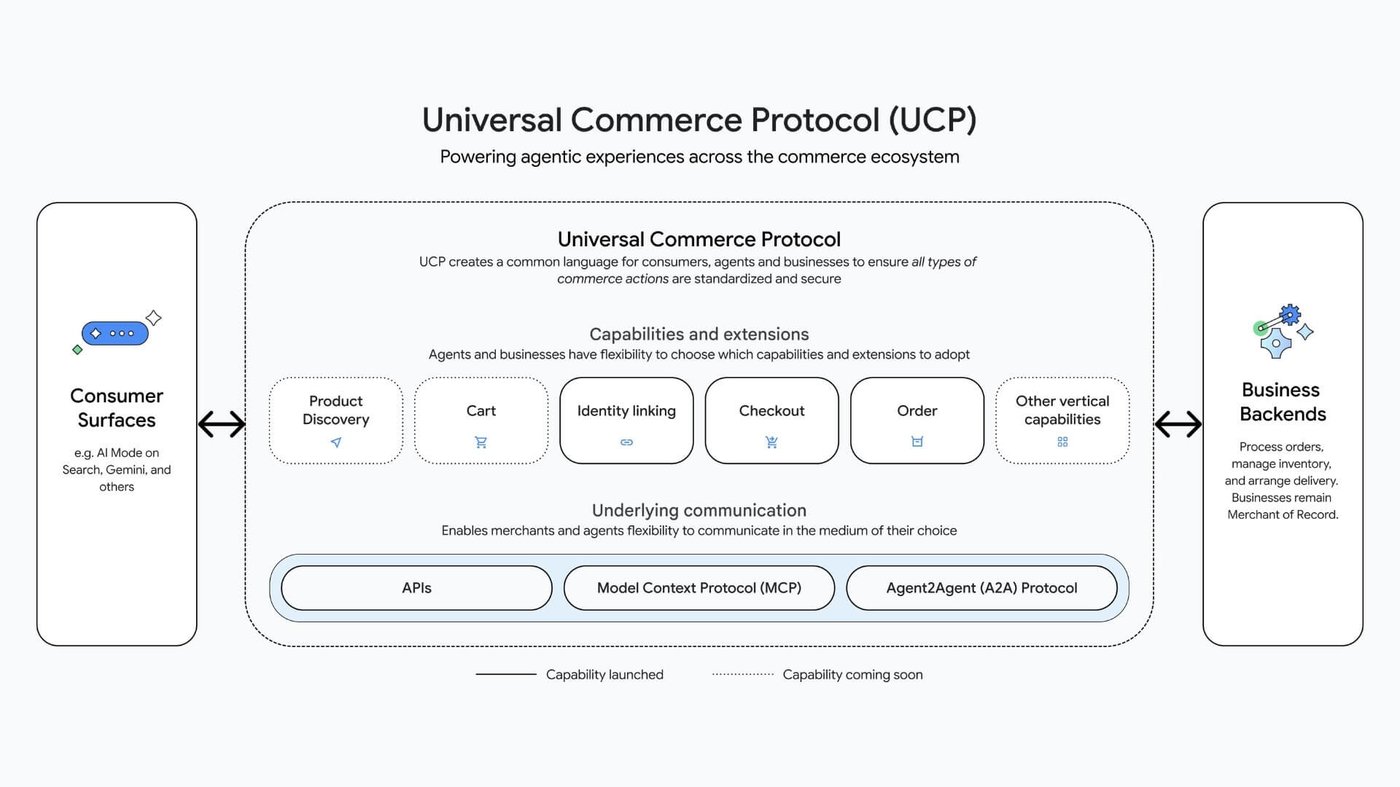
Three days later, Google announced the Universal Commerce Protocol (UCP) at the National Retail Federation conference. UCP was an open standard, co-developed with Shopify, Etsy, Wayfair, and Target, and endorsed by 20+ partners including Visa and Mastercard.
Unlike a proprietary protocol, UCP was published openly. Any developer could implement it. Any merchant could adopt it.
Why it matters: This wasn't OpenAI's story anymore. The entire tech and retail industry was moving in parallel. Three of the world's largest tech platforms had committed to agentic commerce, and the payment networks had backed an open standard. This was an industry bet, not a single platform bet.
FEB '26: Google UCP Checkout Live (Etsy + Wayfair)
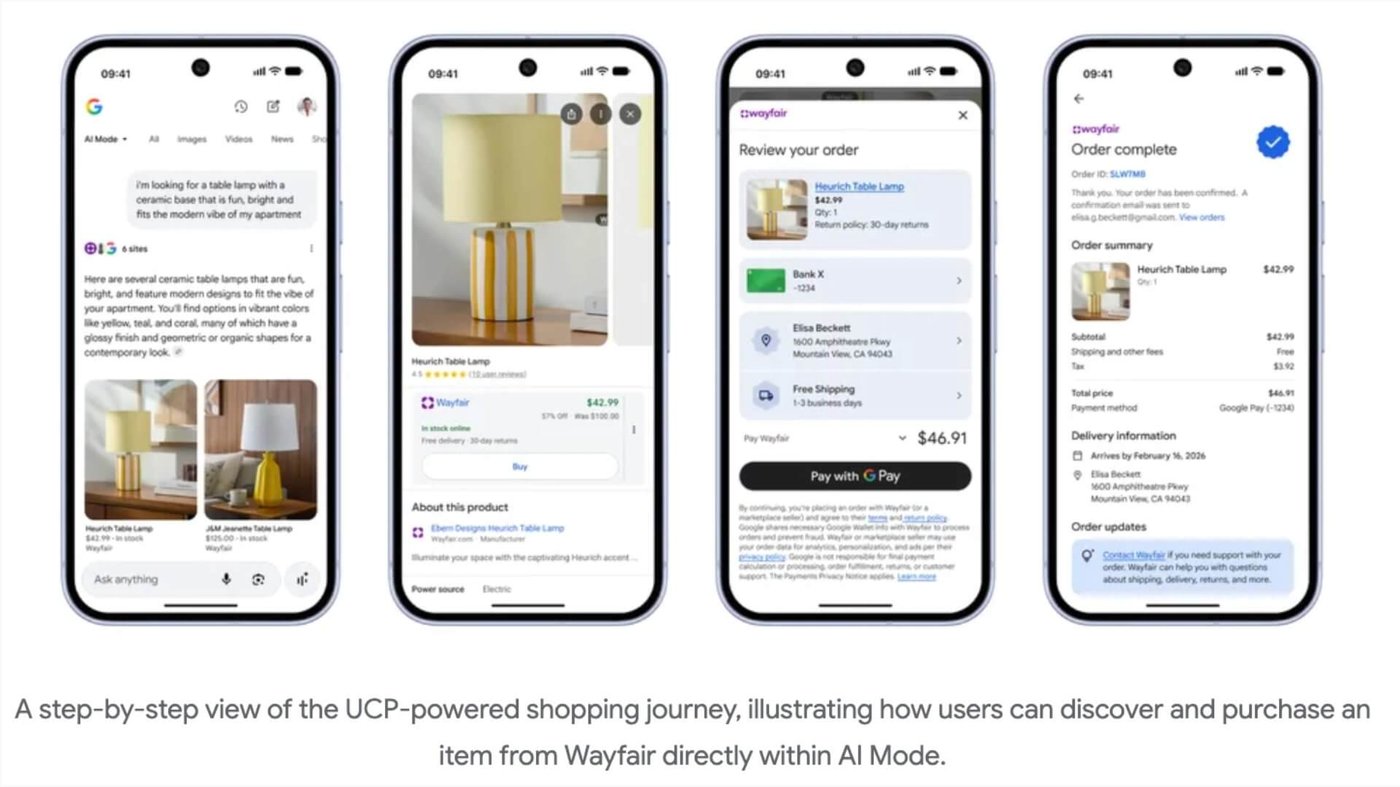
On February 11, Google moved UCP from announcement to production. Checkout went live with Etsy and Wayfair. Users could now research a product in Google AI Mode or Gemini and complete the transaction without leaving the interface. Payment was through Google Pay or PayPal. Shipping information was pulled from Google Wallet.
This was general availability, not a pilot. Real customers were buying through agentic checkout.
Why it matters: This moved UCP from announcement to production. Actual transactions began happening. The infrastructure was live and working.
MAR '26: Google UCP Cart and Catalog Update
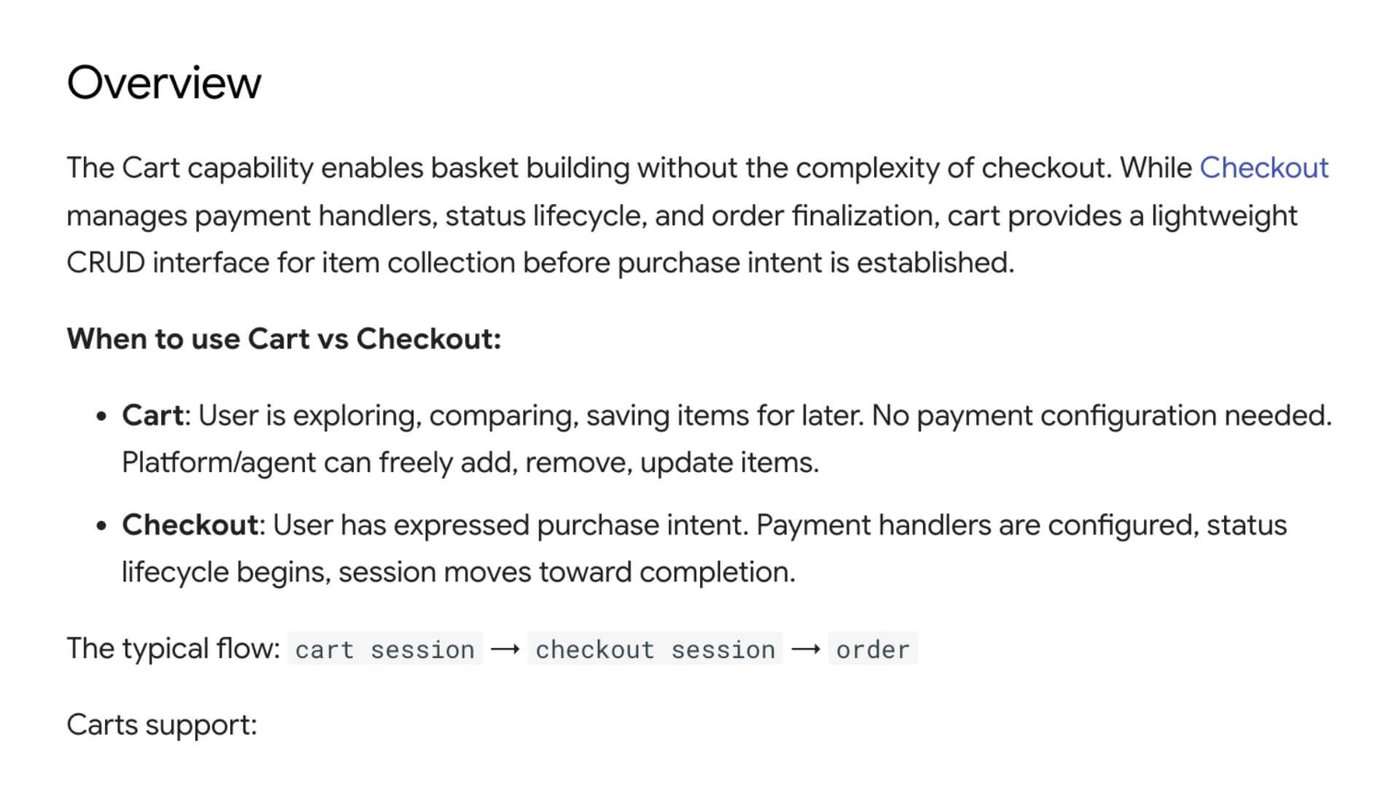
Google expanded UCP's capabilities in mid-March. The protocol added Cart (multiple items from one store), Catalog (real-time product details and inventory), and Identity Linking (loyalty benefits carry across platforms). The infrastructure was becoming feature-complete for real commerce.
This transformed UCP from "research and buy" into "research, compare, build a cart, apply loyalty, and checkout."
Why it matters: This wasn't just discovery anymore. This was full commerce. Multi-step purchase journeys were now possible inside AI agents. Brands needed to think about loyalty, cross-selling, and how their product information appeared to AI systems.
APR '26: American Express Agentic Commerce Experiences (ACE)
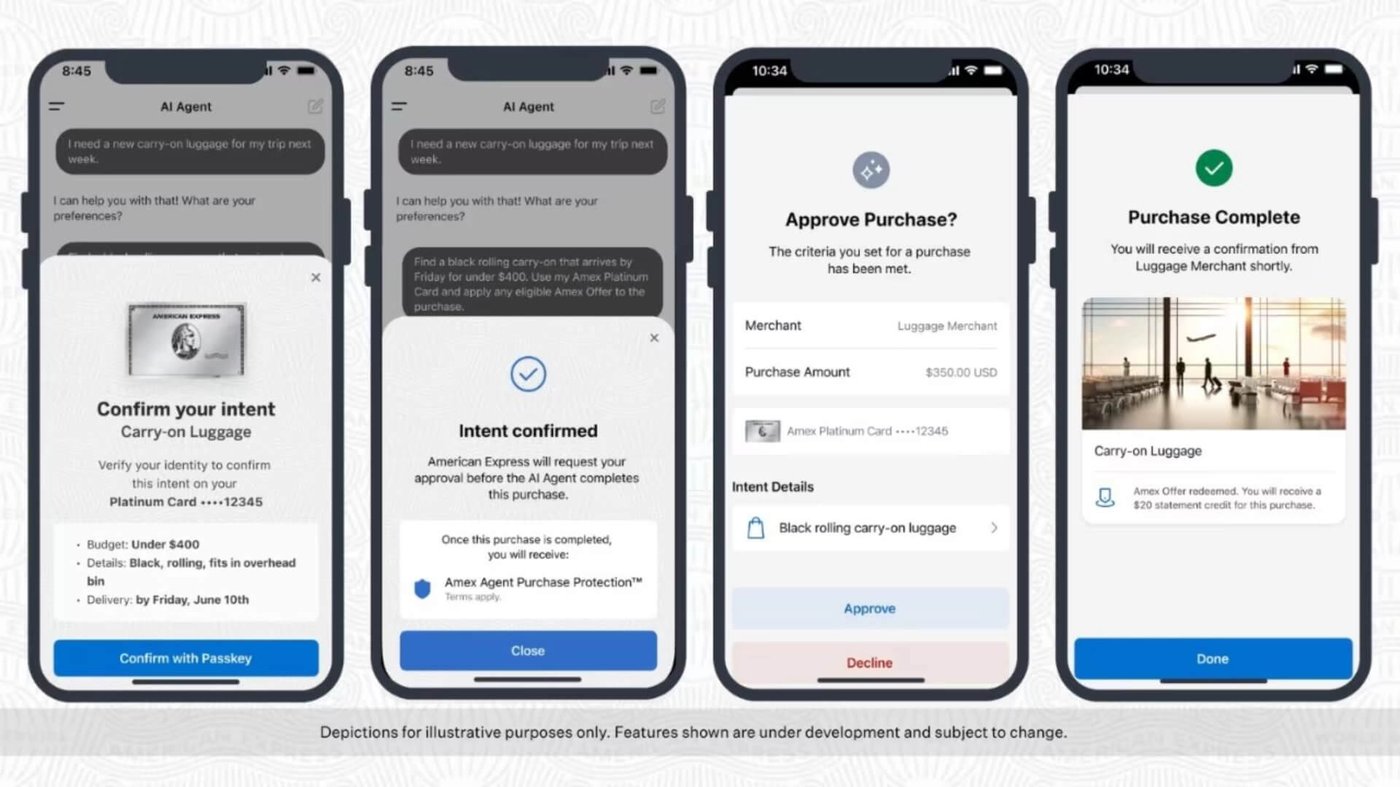
American Express announced ACE, its developer kit for agentic commerce. American Express also announced purchase protection for agent payments, signaling that agent-driven transactions were legitimate commerce.
By April, all three major U.S. card networks (Visa, Mastercard, American Express) supported agent-initiated transactions. The payment layer was now standardized.
Why it matters: The last critical infrastructure piece was complete. Brands could accept payments from any agent on any platform, knowing the transaction was secure and compliant. The technical risk of agentic commerce had been absorbed by the payment industry.
MAY '26: Amazon Alexa for Shopping
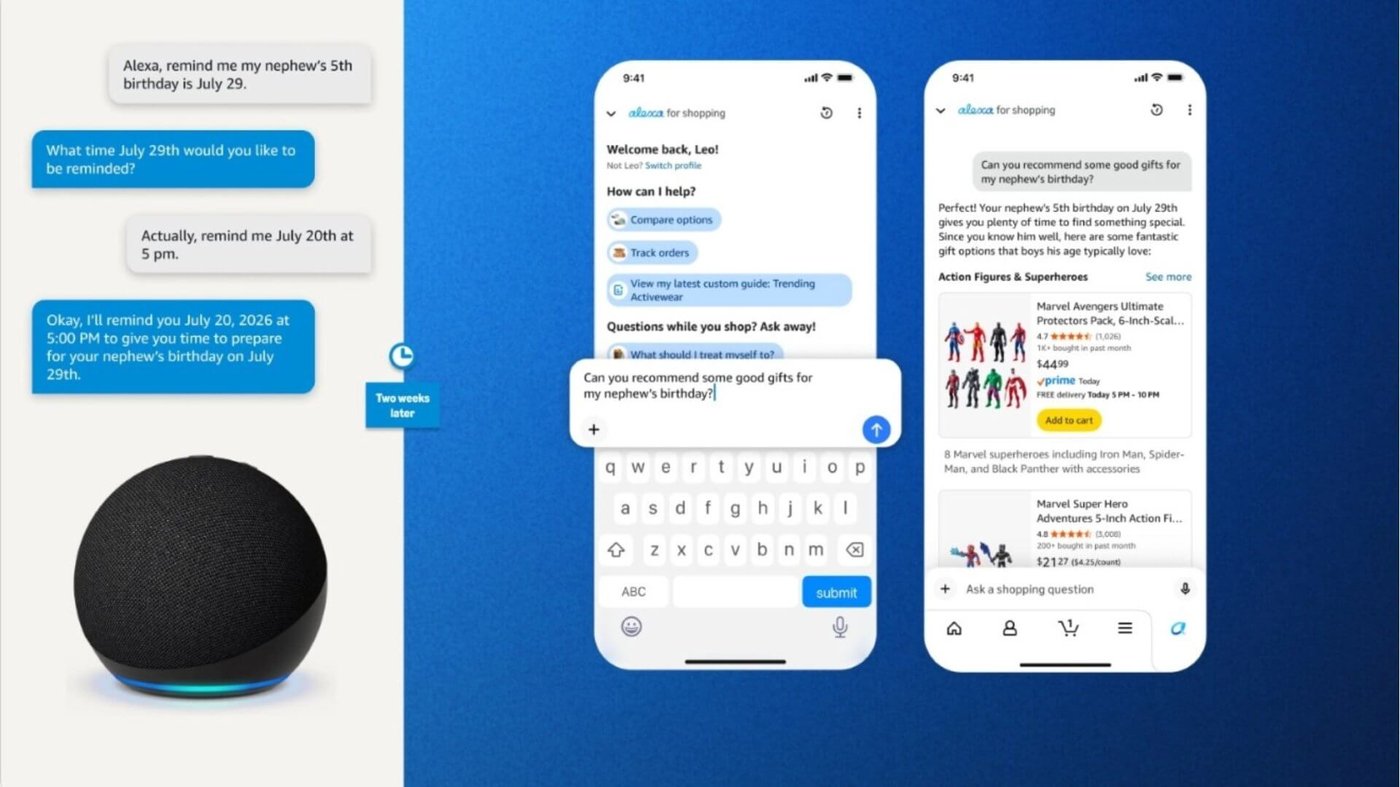
Amazon unified Rufus and Alexa+ into Alexa for Shopping on May 13. The unified agent appeared in the Amazon app search bar, in standalone chat, and across all Echo devices. Shoppers could find products, compare options, and build shopping guides.
When Amazon announced this, it revealed the numbers. Rufus had reached 300 million customers and drove 12 billion dollars in incremental sales. This wasn't a feature. This was a revenue engine operating at scale.
Why it matters: The largest e-commerce retailer had moved agentic commerce from sideline to core business. If Amazon is betting this heavily on agent-driven shopping, agentic commerce is becoming a primary path to purchase.
JUN '26: Visa x OpenAI + Shopify Spring '26 Edition
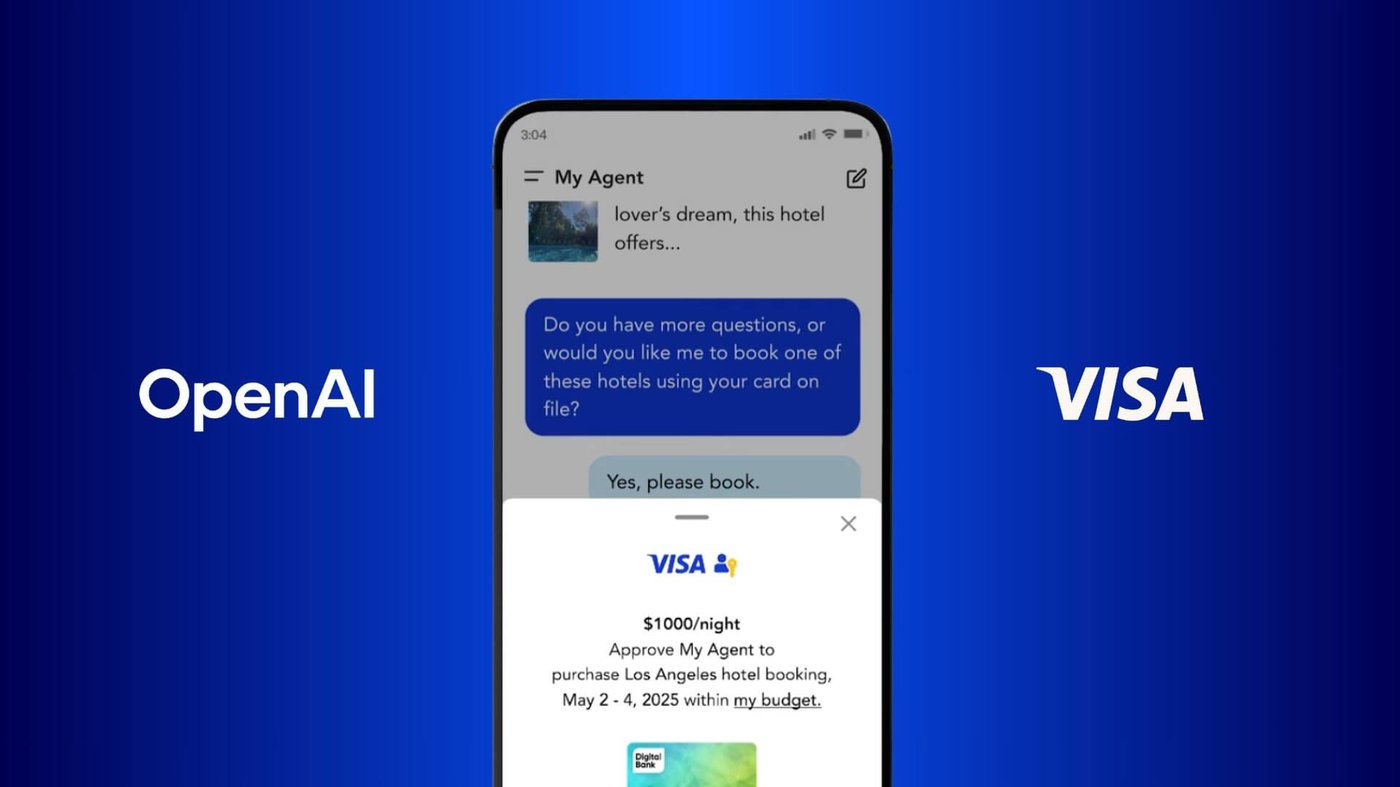
On June 10, Visa and OpenAI announced a strategic partnership to enable Visa payments inside agentic commerce. Visa's global payment network was now directly wired into ChatGPT.
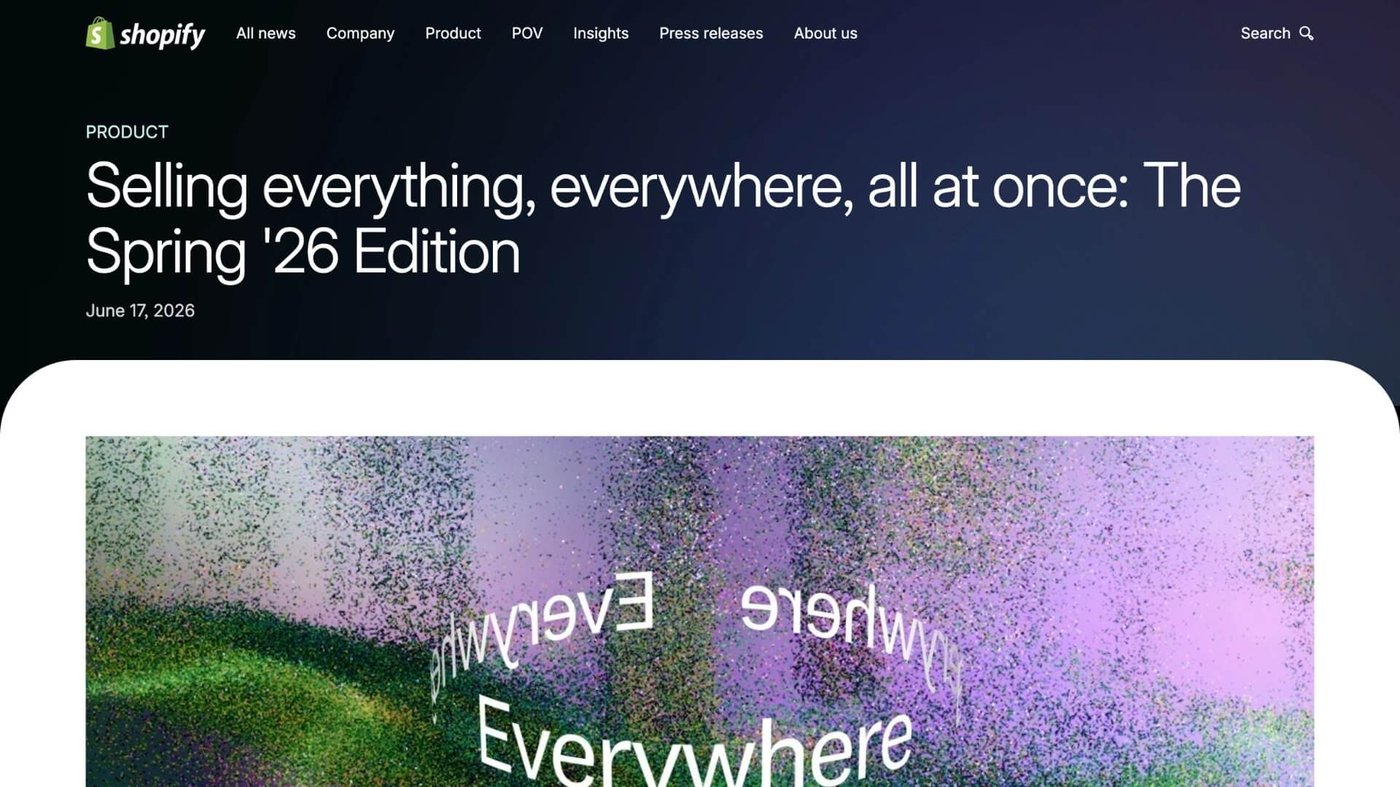
One week later, Shopify released its Spring '26 Edition with 150+ product updates. The centerpiece was Shopify Catalog, a standardized product data layer that auto-syndicates merchant inventory to ChatGPT, Copilot, Google AI Mode, and the Shop app without manual setup.
Why it matters: The plumbing and the merchant layer were complete. Payment networks were integrated. Merchant catalogs were standardized and distributed. A brand on Shopify could be live in agentic checkout on four major platforms without direct platform negotiation.
JUL '26: Salesforce Agentforce Commerce
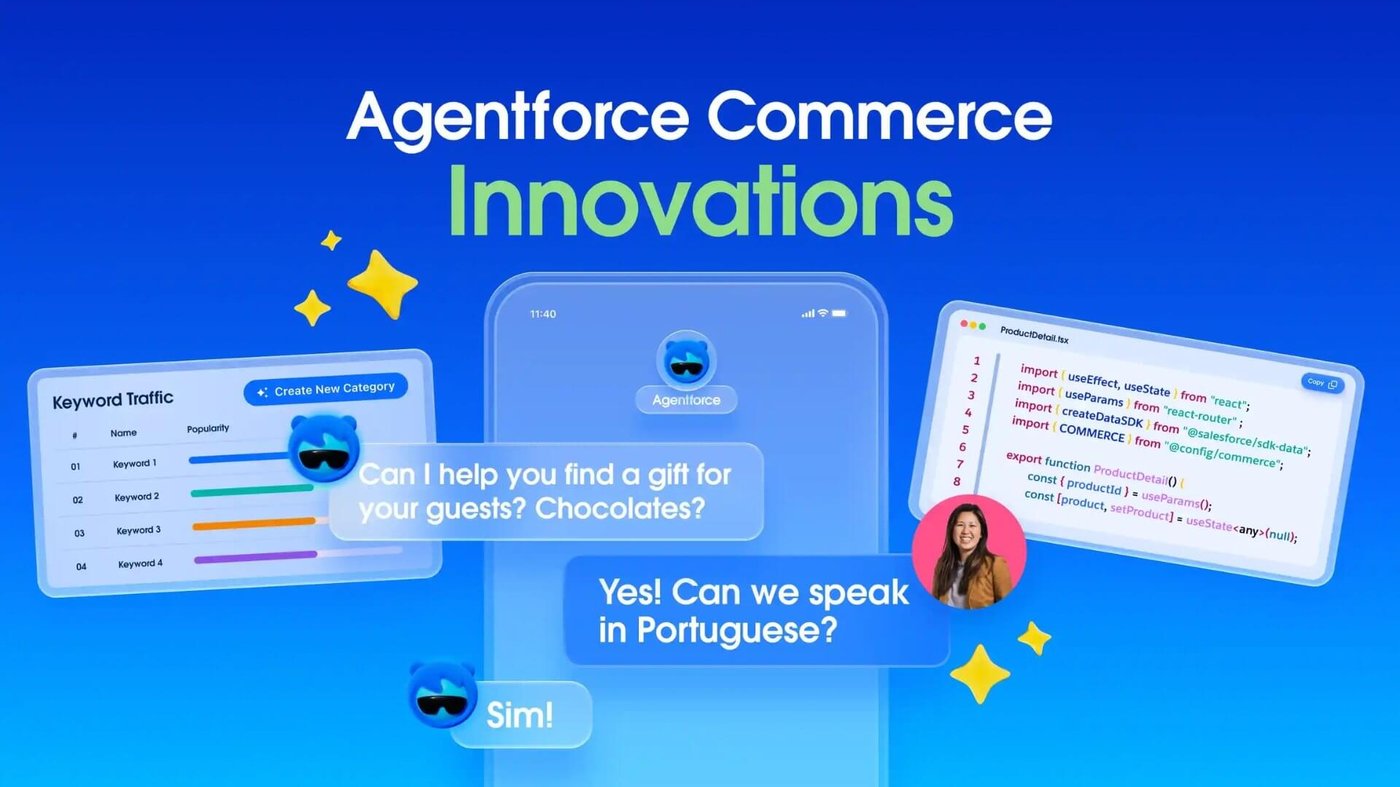
On July 6, Salesforce released Agentforce Commerce. Three agents went generally available: Shopper Agent, Buyer Agent, and Merchant Agent. The Shopper Agent connected directly to ChatGPT without additional software. Product catalogs synced from Salesforce Business Manager straight into ChatGPT and Google.
During the 2025 holiday season, AI influenced 20 percent of global online sales (262 billion dollars). Retailers running their own Shopper Agents grew sales 59 percent faster than those still on the sidelines.
Why it matters: Enterprise platforms were now moving agentic commerce into production at scale. Salesforce customers could deploy owned agents on their own properties while being discoverable on ChatGPT and Google.
What this Means
Nine months. Five major tech platforms. Two open protocols. Three payment networks. Millions of merchants ready to go. Billions of users with access.
The infrastructure is now in place. The standards are set. Over 1 million merchants are live in agentic commerce. Users are transacting through it: AI influenced 20 percent of global online sales during the 2025 holiday season.
What's left is scale. Brands that understand how AI agents discover and rank products will be better positioned. Brands that treat product data as infrastructure will be recommended. Brands that ignore this will struggle to be visible.
Agentic commerce isn't theoretical anymore. It's operating at production scale.
Keep reading
Related articles



Free AI Readiness Audit
Find out what AI agents can't read on your product pages
Send us 3 product URLs. We score them for ChatGPT, Gemini and Google AI Mode, show what is missing and send them back fixed.
- AI Readiness Score for each page
- Missing attributes, keywords and shopper intents
- The optimized pages, ready to publish
Parlano di noi









How Agentic Commerce Went From Concept to Infrastructure in 9 Months
From OpenAI Shopping Research to Salesforce Agentforce Commerce: the month-by-month timeline of the launches that turned agentic commerce from concept into production infrastructure.
Timeline of key agentic commerce launches
Between November 2025 and July 2026, **five major tech platforms, two open protocols and three payment networks** built the infrastructure for agentic commerce. Key milestones: OpenAI Shopping Research, Shopify Agentic Storefronts, Google's Universal Commerce Protocol (UCP), Amazon Alexa for Shopping and Salesforce Agentforce Commerce. AI influenced 20% of global online sales in the 2025 holiday season ($262 billion). **Brands that treat product data as infrastructure will be recommended**; the rest will struggle to be visible.
When did agentic commerce become real? | Between November 2025 and July 2026, when OpenAI, Shopify, Google, Microsoft, Amazon and Salesforce launched agentic shopping and checkout, and Visa, Mastercard and American Express enabled agent-initiated payments. What is the Universal Commerce Protocol (UCP)? | An open standard announced by Google in January 2026, co-developed with Shopify, Etsy, Wayfair and Target, that lets AI agents complete purchases inside Google AI Mode and Gemini. How much online shopping does AI influence? | AI influenced 20% of global online sales during the 2025 holiday season, about $262 billion. What should brands do now? | Treat product data as infrastructure: complete, structured and consistent across store, feeds and marketplaces, so AI agents can find and recommend every product.
